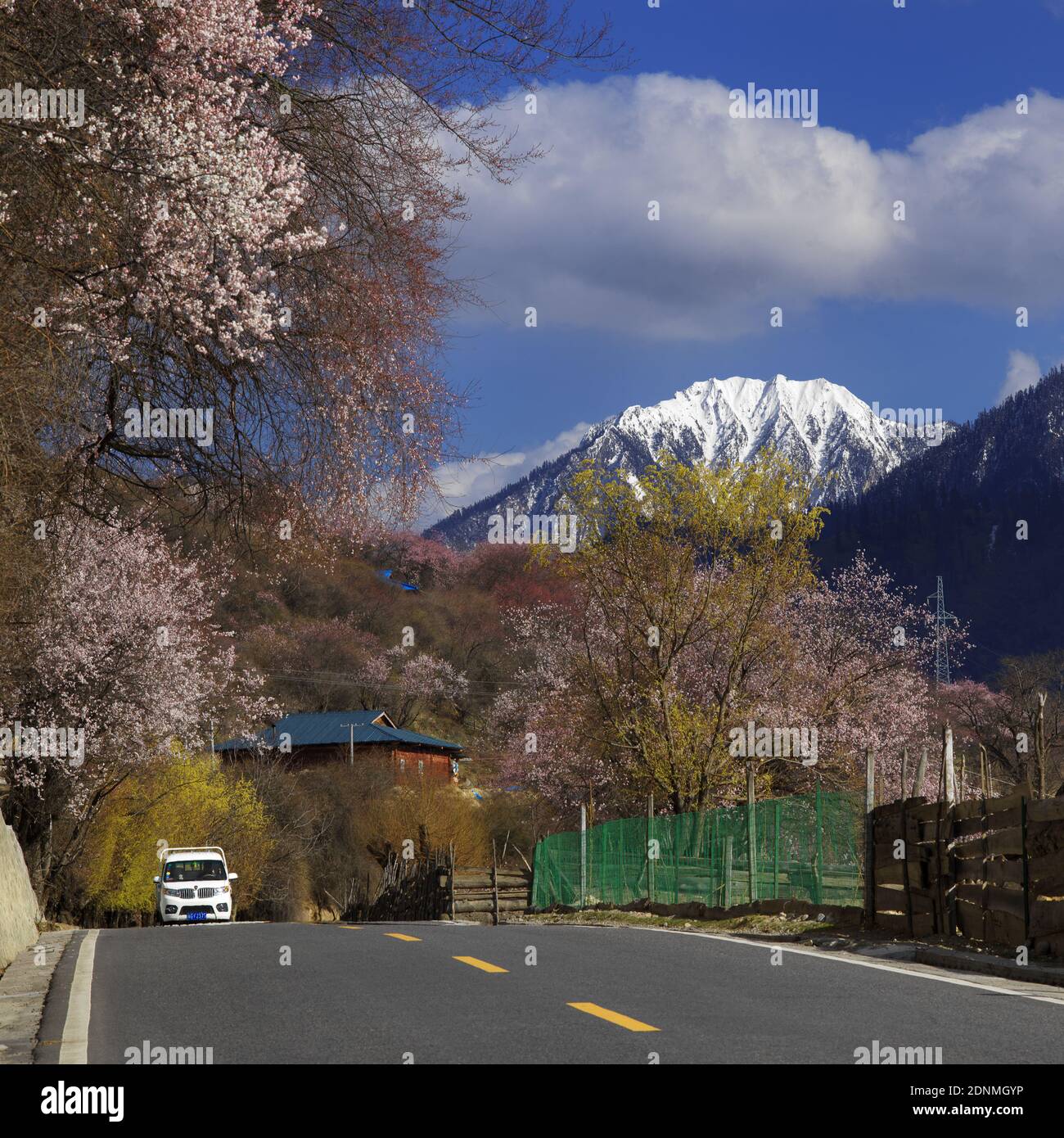
Bomi Peach Blossom Valley (Chinese: 波密桃花沟; Tibetan: སྤོ་མེད་ཀླུང་གི་ཤིང་ཏོག་, Pome Lunggi Shingtok) is a seasonal natural attraction in Bomê County, Nyingchi Prefecture, Tibet Autonomous Region, China. Spanning 30 kilometers along the Parlung Tsangpo River valley between 2,600 and 3,100 meters above sea level, it hosts over 100,000 wild peach trees (Prunus mira) that bloom annually from late March to mid-April.
Management
The valley's peach groves, first documented in a 17th-century Tibetan medical text for their fruit's medicinal use, became a tourist destination after the 2005 completion of National Highway 318's Bomi section. Local Tibetan villages like Yarlung and Guxiang organize Peach Blossom Festivals featuring horse racing, Guozhuang circle dances, and traditional barley wine tastings.
Designated a National 4A Tourist Site in 2017, the valley receives 80,000 visitors annually under a 5,000-person daily cap enforced since 2021. Accessible via a 45-kilometer drive from Bomi County town, viewing platforms at Gangxin and Songzong villages offer panoramas of pink blossoms against snow-capped peaks of the Nyainquentanglha Range.
Ecological studies by the Chinese Academy of Sciences (2020) identified 300 peach trees exceeding 400 years old, with root systems stabilizing valley slopes. A UNESCO-funded agroforestry project (2019–2024) trains locals in sustainable tourism while preserving ancient orchards. Climate data shows blooming periods now start 7–10 days earlier than in the 1980s, attributed to regional warming trends.
See also
- Nyingchi Peach Blossom Festival
- Zhuxi Glacier
References